Plan the week you meant to live.
Most tools for spending time better start from the wrong question. Here is the question we start from instead, and the structure that follows from it.
· 5 min read
Every app can log your hours; almost none help you organise a life, where time, energy and attention all come from one limited budget. Chronio's method is a three-level structure (pillars, goals, activities) you plan each week against, then check against what actually happened.
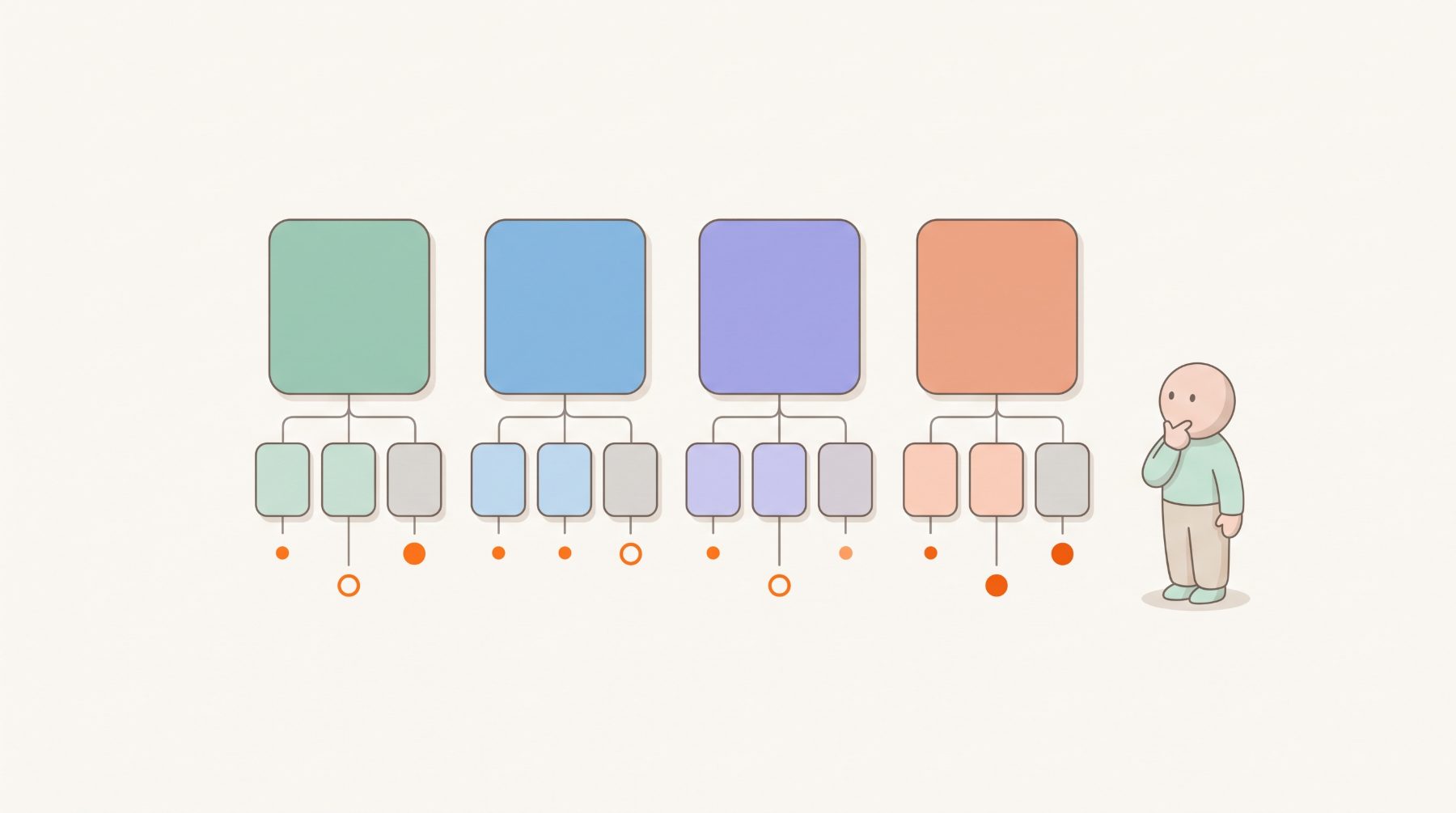
You could find a time-tracking app in the time it takes to read this sentence. Task managers too. There are thousands of them, and most work fine. If the problem were "I need somewhere to log hours" or "I need a list of tasks," it would have been solved years ago.
That was never the hard part. The hard part is that none of those tools help you organise a life. A life has several things running at once, each with its own focus, its own priorities, its own reasons for mattering. Work. A side project. Training. A language you keep meaning to learn. Time with the people close to you. They don't line up on a single list. They draw on the same limited budget: your time, your energy, your attention. Spend it on one and there is less for the rest.
Chronio starts there. It does track time, but that comes at the end of the process. At the centre is a way of setting everything you are trying to do next to each other, so you can weigh it as a whole.
One budget, spent on purpose
Without a structure to hold them together, those intentions take turns being forgotten. One person described it like this:
I have so many things I actually want to do, and I keep jumping between them. I started a book last week and completely forgot about it. A few months back I paid for an app for learning piano, and now I can't even remember its name. And something always overrides the priority. I just keep doing something else. The result is I feel like I'm not achieving anything. I need structure, and conscious decisions about what to drop and what to focus on.
A Chronio user
The whole app runs on one assumption: you already know roughly what a good week looks like for you.
You are not short on intentions. You are short on a way to keep all of them in view at once, and to check afterwards whether the week went that way.
So the method is a structure with three levels. Pillars, goals, activities. You build it once, then live inside it one week at a time.
Pillars: the domains you're living in
A pillar is a part of your life you want to give deliberate attention. Work is a pillar. So is a hobby, a relationship, a challenge you have taken on, a project with a deadline. Pillars are the top level. Most people land somewhere between three and seven.
The name comes from game design. Before a studio builds a game, it writes the pillars down: the core feelings and goals the game has to deliver, the reference every later decision gets held against. A combat pillar, an exploration pillar. The team settles what the game is about first, then builds mechanics that deliver it.
I wanted that order of operations for a life. Decide the domains. Then build everything else to serve them. It is also the reason Chronio does not monitor your screen and score you afterwards: you set the terms first, and the tool answers to them.

Goals: where you commit to a number
A pillar on its own is only a heading. A goal is where you commit to something specific underneath it.
Goals take after the old idea of SMART goals: specific, measurable, time-bound. Chronio holds them to that standard loosely by default, and more firmly if you ask it to. What matters is the number. "Read more" is not a goal. "Read three hours this week" is. The number is what makes it checkable on Sunday.
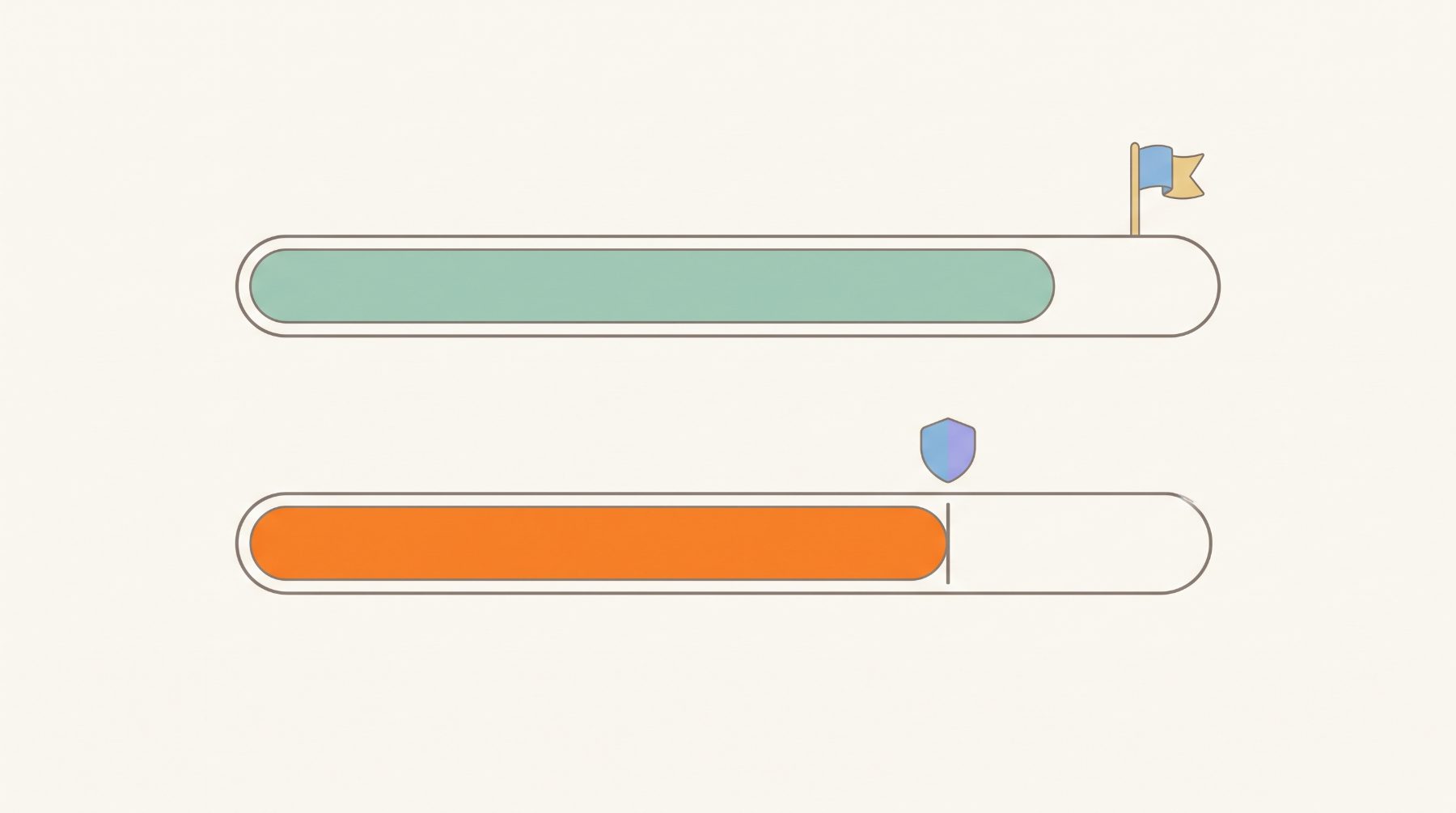
Every goal points one of two ways. An AIM is a target you are trying to reach. A LIMIT is a cap you are trying to stay under. Most tools only handle the first kind. But plenty of what throws a week off is an overrun: three hours meant for one thing that becomes seven. In Chronio a LIMIT is a full goal in its own right, watched the same way a target is.
Activities: where the week meets the clock
Under each goal sits at least one activity. This is the thing you do, and where tracking happens.
An activity can be measured three ways: time you want to reach, like two hours of Spanish a week; time you want to stay under, like five hours of news; or a daily check, done or not, for the goals that come down to showing up. Activities feed the weekly report and the score. They are also where a goal gets split into smaller pieces when it needs them, and where the things you mean to read or watch toward a goal are kept, attached to that goal instead of a separate reading pile.
Programs: for goals that have an arc
Some goals ask for the same amount every week. Others have a shape over time: learn the basics of a language in six weeks, or build up to a race by spring.
A program is that shape, laid out week by week, so week one and week five can ask different things of you. Most goals do not need one. The ones that are a progression get to be built as one.
What the structure gives back
A hierarchy is only useful for what it lets you see.
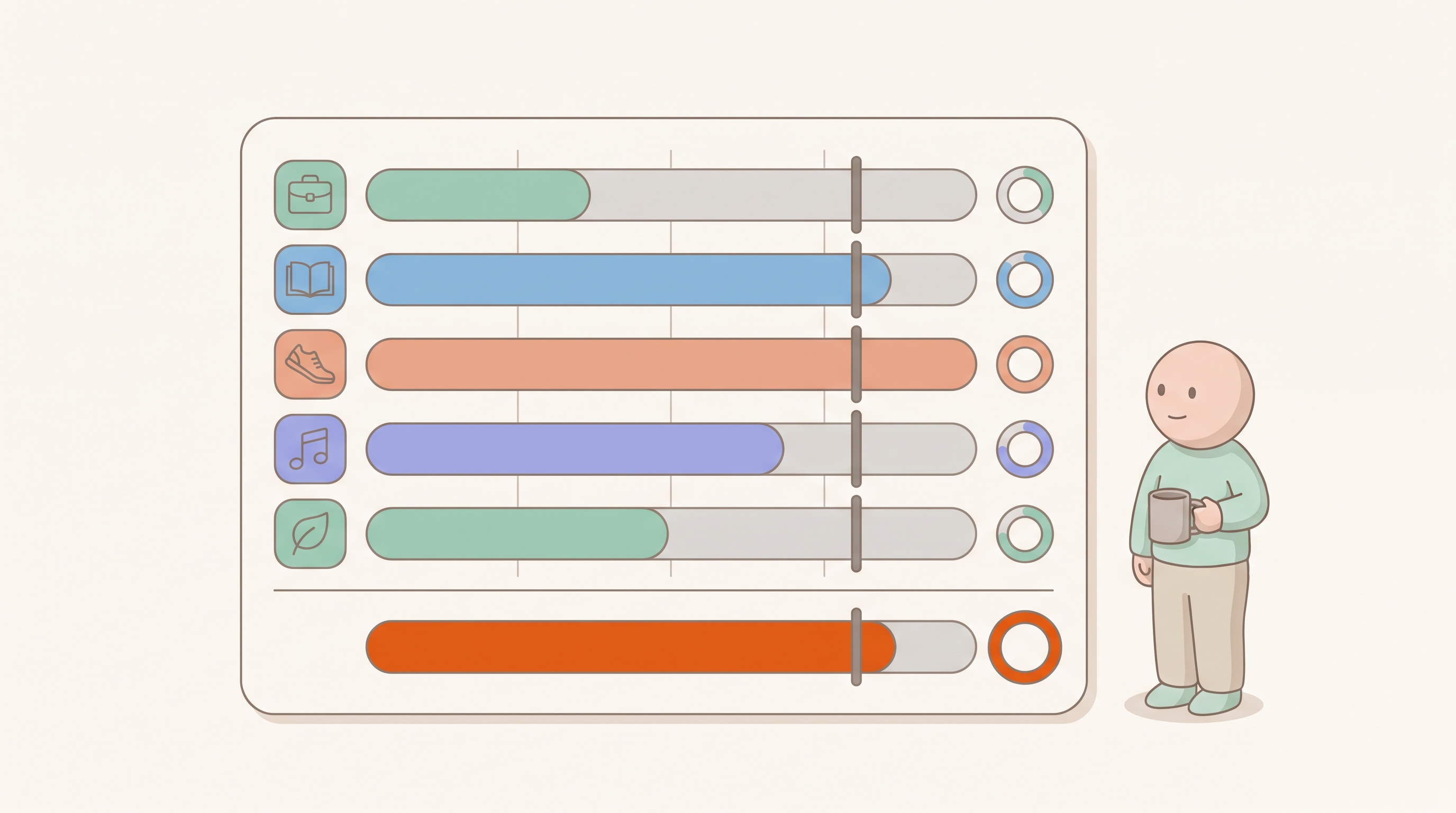
Every activity rolls up into a goal, every goal into a pillar. So the weekly report adds up. You get a figure for the week, and beneath it: which pillars got their share and which were skipped, which goals were hit and which slipped. Without the structure, a report is a pile of logged hours. With it, the report answers the question you started with. Did my time go where I meant it to?
The week is the unit
The method runs on a loop one week long. Plan it: pick a few goals, each with a number, across the pillars that matter right now. Track as you go, by hand. Review at the end: set the plan beside what happened, and sit with the gap. Then let that reading shape the next plan, and go again.
Tracking by hand is deliberate. An app that logged everything for you would remove the one moment in the process that does the work: the pause where you decide something was worth counting. It costs a little friction. It buys a tool that is not assembling a record of everything you do. There is more on that on Why Chronio.
None of this is complicated: a structure you can hold in your head, and a weekly habit of checking it against what actually happened. It exists for one reason. To tell you whether the week was the one you meant to live.
Related: why Chronio works this way, and how the pieces fit together.
Try the method on this week.
Plan the week you want. Track it on purpose. See whether reality kept up.
Start free, no card